
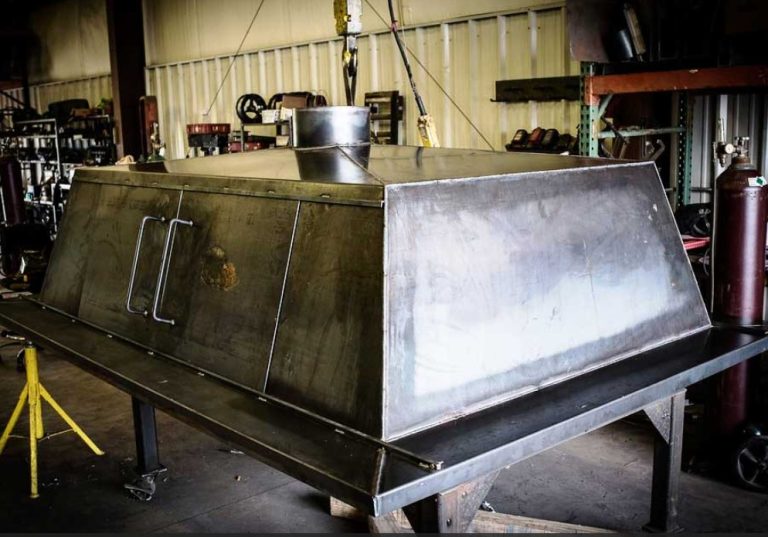
When most people hear parts manufacturing, they picture a machine shop cutting chips off a block of steel. And yes — machining absolutely plays a role. CNC mills, lathes, and precision equipment are how many tight-tolerance metal parts get made.
But that’s only part of the story.
In a lot of industrial settings, the real value isn’t just a single precision part. It’s how multiple custom metal parts are designed, cut, formed, welded, and assembled into something that actually works in the field. Guards, platforms, brackets, frames, ductwork, skids — these aren’t just machined pieces. They’re built systems.
Good parts manufacturing means thinking through fit-up, installation, strength, service access, and long-term durability — while still controlling parts manufacturing cost. Because at the end of the day, a part that looks good on paper only matters if it performs on the floor.
Let’s start with a simple distinction.
A machined part is typically made from solid stock — bar, plate, or billet — and shaped using equipment like mills, lathes, and machining centers. The focus is precision. Tight tolerances. Surface finish. Repeatability. These parts are often smaller, highly detailed, and critical to motion, sealing, or alignment.
For a practical overview of core machining methods like turning, milling, drilling, and grinding, this industry guide provides a helpful breakdown.
A custom part, especially in heavy industry, often looks very different. Instead of being carved from a solid block, it may be cut from sheet or plate, bent on a press brake, welded to other components, reinforced with gussets, and built into a larger assembly.
It may not require thousandths-of-an-inch tolerances — but it absolutely requires strength, durability, and practical design.
Here’s the key difference:
Both are important. Many custom assemblies include machined components inside them. But in industrial plants and construction environments, the bigger opportunity often lies in the design and fabrication of complete assemblies — not just individual precision pieces.
When you zoom out, parts manufacturing isn’t just about making a part. It’s about making parts that work together.
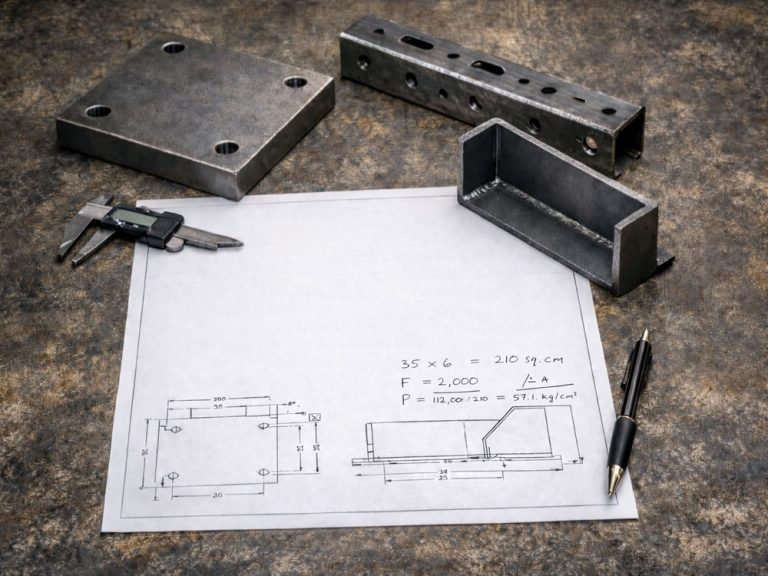
Now let’s talk about what actually happens when you move from a single component to a full assembly.
Custom parts manufacturing usually starts with a problem in the field. A platform needs to fit around existing equipment. A guard has to allow maintenance access. A support frame must carry real loads, not theoretical ones. The design has to reflect reality.
From there, the workflow typically looks like this:
If you look at common metal fabrication processes, you’ll see this same sequence repeated across industries — cut, form, weld, assemble. The difference is in the details: tolerances required, load conditions, corrosion environment, and how the assembly will be installed.
This is where experience matters.
Good custom parts manufacturing isn’t just about having the right equipment. It’s about designing parts so they can actually be built efficiently. It’s about reducing weld distortion, minimizing unnecessary machining, standardizing material thickness where possible, and thinking ahead about installation constraints.
When done well, the result isn’t just a pile of parts. It’s a system that fits, installs cleanly, and performs in the real world.
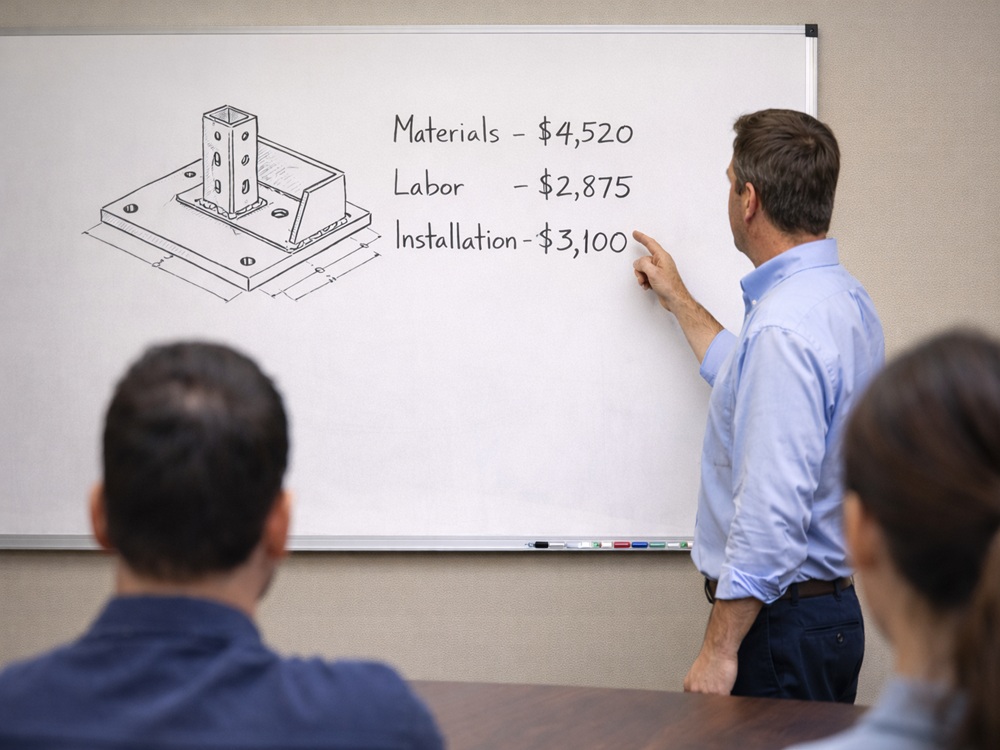
Now let’s talk about what everyone eventually asks about — cost.
Parts manufacturing cost is driven by more than just material price. Yes, steel and aluminum matter. But in most custom fabrication environments, cost is heavily influenced by labor hours, machine time, setup complexity, welding time, finishing requirements, and how efficiently the job moves through the shop.
Design decisions have a direct impact on cost. Extra welds add labor. Tight tolerances where they aren’t needed add machining time. Excess material thickness adds both purchase cost and fabrication time. On the other hand, smart design can reduce fit-up time, simplify assembly, and improve repeatability.
Some custom parts are one-off assemblies, but it’s often true that customers need multiple of the same part or assembly. Whenever a shop can utilize an assembly line approach to manufacture a higher number of parts in one job, the unit price drops considerably. Keep that in mind as you design your job. It might be cheaper in the long run to order multiples of the desired part.
It’s also important to remember that using custom parts designed for your needs will provide functionality and longevity that off-the-shelf parts won’t provide. Even though a custom assembly may have a higher price tag, the total cost of ownership is almost always lower when you take all considerations into account.
The best metal fabricators emphasize process efficiency, lean flow, and waste reduction as core drivers of manufacturing competitiveness. Evaluate your potential fabrication vendors to make sure that they have the right standards and processes in place to deliver the best quality parts at the best price.
Vendors that install their fabrications are also a cost advantage because they can quickly and easily deal with any issues as a united shop and field team, rather than having two vendors trying to communicate with each other if something isn’t fitting as expected.
In short:
When evaluating custom parts, the real question isn’t just “What does this part cost?” The better question is “What does it cost to build, install, maintain, and replace over time?”
That’s where disciplined parts manufacturing separates average suppliers from strong long-term partners.
Parts manufacturing covers a wide range of activities — from high-precision machined components to large, welded custom assemblies. Machined parts focus on tight tolerances and geometry. Custom fabricated parts focus on strength, fit, and real-world function. Both have their place.
The key is understanding the difference.
When you move into custom metal parts and assemblies, design decisions drive everything — build time, installation efficiency, durability, and overall parts manufacturing cost. Smart design, efficient processes, and the right fabrication partner can significantly lower total installed cost over the life of the equipment.
At the end of the day, good parts manufacturing isn’t about making something that simply matches a drawing.
It’s about delivering parts and assemblies that work — reliably, efficiently, and for the long haul.
If you’re in need of a partner to help you design and fabricate custom metal parts and assemblies, we would love to talk with you! Contact us to tell us about your project needs.
On Time Fab is your trusted team of skilled metal fabricators and fabrication contractors delivering first quality fabricating and custom metal fabrication solutions built to last on time every time.