
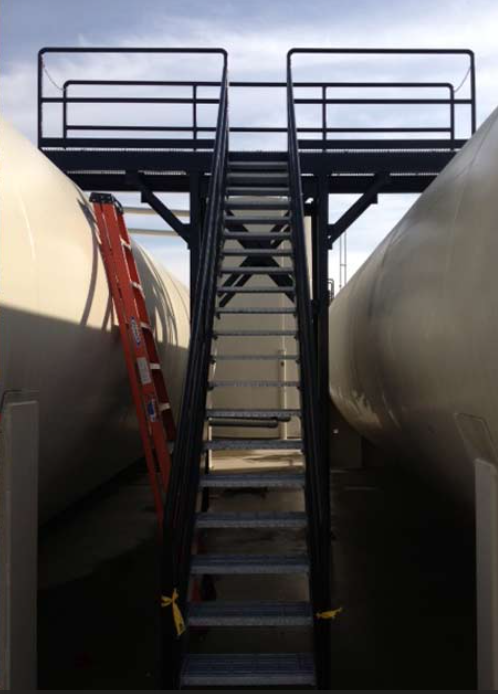
Industrial projects cover a wide range of activities. They can include electrical work, piping, structural steel, concrete, automation systems, equipment setting, and mechanical maintenance. On many job sites, you will see multiple trades working side by side — electricians, millwrights, pipefitters, ironworkers, welders, and more.
So, when someone says, “We have an industrial project,” what does that really mean?
The answer is: it depends on the scope.
In this article, we will narrow that scope quickly and intentionally. While industrial projects can involve dozens of specialties, our focus here is on metal fabrication and field installation — specifically, what it means to install fabricated metal components inside an operating facility or on an active construction site.
There are many situations where pre‑fabricated products are available and make sense. Standard railings, stair towers, equipment platforms, and even modular structural systems can often be purchased as engineered kits. In the right setting, these solutions are efficient and cost‑effective.
However, a significant portion of industrial facilities do not fit into a catalog. Aging plants, tight access areas, non‑standard elevations, legacy equipment, and process modifications often require custom metal fabrication designed for that exact environment.
And when custom fabrication is required, installation is no longer a simple “bolt‑together” task. It becomes a coordinated effort involving measurement verification, field adjustments, safety planning, equipment access, and real‑time problem solving.
That is where field installation in industrial projects becomes its own discipline.
In the sections that follow, we will:
Because in industrial work, design on paper is only half the battle. Execution in the field determines whether the project actually succeeds.
“Industrial project” can mean anything from a small maintenance upgrade to a full facility expansion. In the same week, an industrial site might be running a shutdown for maintenance, adding new process piping, installing electrical controls, setting equipment, and modifying structural supports — all while production leaders are trying to keep the plant running safely and on schedule.
That is why industrial work is rarely a single-trade effort.
Even when the end goal is “just install this one thing,” the execution typically touches multiple disciplines:
In other words, industrial projects live or die on coordination.
When multiple contractors are working in the same footprint, small misalignments create big consequences — clashes in the work area, rework, schedule delays, and sometimes safety events. That is why construction leaders put heavy emphasis on trade coordination across the full project lifecycle, and why complex sites lean on early collaboration between disciplines instead of the “handoff and hope” approach.
Now add the reality that many industrial projects are not clean-slate builds.
Most manufacturers are modifying a facility that already exists. That means you inherit constraints you can’t just wish away:
Industry groups often describe these as brownfield conditions — and they change everything about planning and execution. In brownfield work, it is not enough to have a design that works in CAD. You need a plan that works in the real plant.
Industrial field installation is not a simple bolt-on activity. It is the integration of new work into a living facility, and that reality pushes many manufacturers away from “catalog” solutions and toward custom fabrications built to fit the constraints of the site.
Because in industrial work, the job is not just building the part. The job is making it fit — safely, correctly, and on the first try.
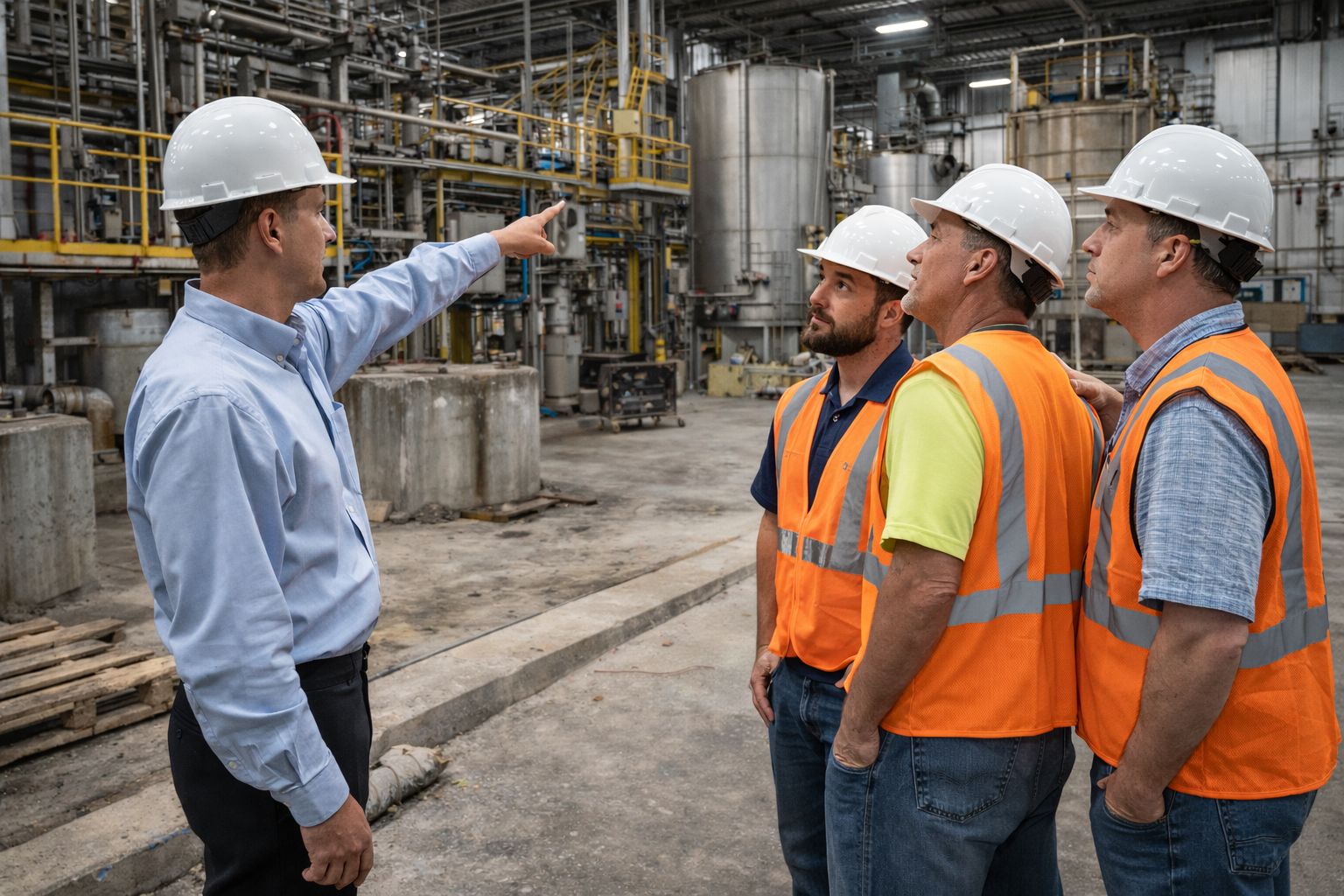
Pre‑fabricated components have an obvious appeal. They are engineered in advance. They often carry standardized load ratings. They can be ordered quickly. Pricing is usually clear and competitive.
In greenfield construction — where elevations, anchor locations, and clearances are designed specifically around those components — pre‑fabricated railings, stair towers, platforms, and modular systems can perform extremely well.
In the right environment, they are efficient. But existing industrial facilities are rarely the “right environment.” In brownfield settings, pre‑fabricated parts often collide with reality in predictable ways:
On paper, the pre‑fabricated solution looked inexpensive. In the field, reality can be harsh and force multiple, costly adjustments.
Slots are torch‑cut to force alignment. Shim stacks grow thicker than intended. Field welds are added where the design assumed bolted connections. Railings are trimmed and re‑spliced. What was supposed to be a fast installation turns into hours — or days — of adjustment.
The cost impact shows up in three places:
Most importantly, responsibility becomes blurred.
If the pre‑fabricated part doesn’t fit, is it a design issue? A measurement issue? An installation issue? A fabrication issue? When fabrication and installation are separated, each party can point to another variable.
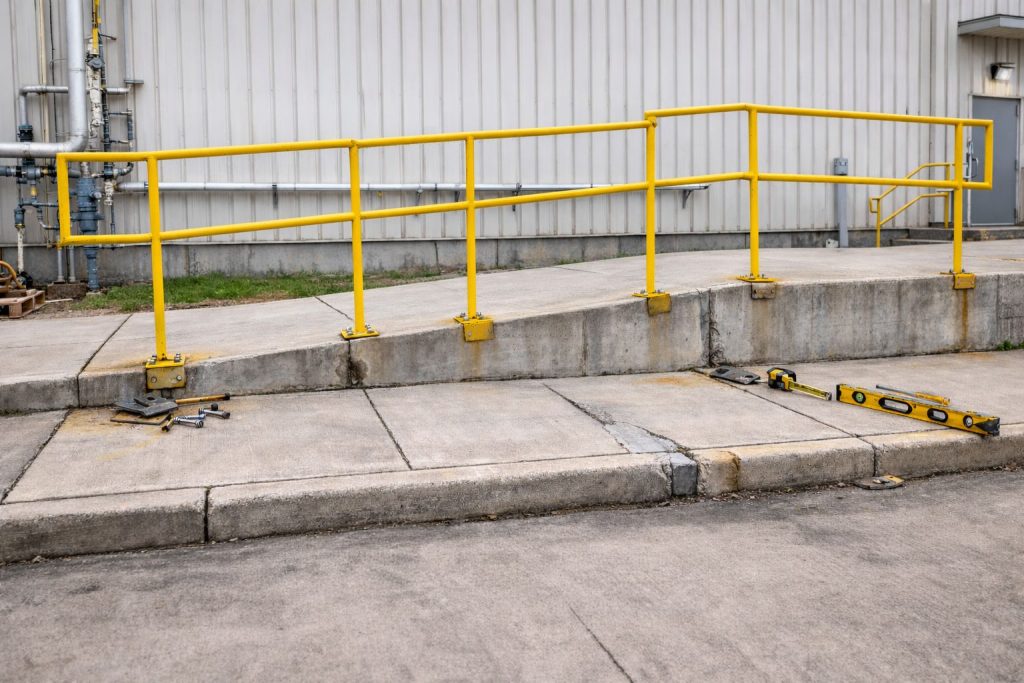
Custom fabrication approaches the problem differently.
Instead of asking, “How do we make this facility fit the product?” the question becomes, “How do we build the product to fit the facility?”
Custom components are:
When fabrication is driven by verified field conditions, installation shifts from modification to execution.
The labor hours move from reactive adjustment in the field to controlled fabrication in the shop. Weld quality improves. Bolt patterns align. Access is preserved. Other trades can plan around predictable completion.
Pre‑fabricated systems absolutely have a place in industrial work. In repetitive layouts, new construction, or standardized expansions, they can reduce cost and simplify procurement.
But in many operating industrial facilities, the apparent savings at purchase often evaporate during installation.
And in industrial projects, the real cost is not the price of the part.
The real cost is the time, risk, and disruption required to make that part fit.
By now, one thing should be clear: industrial projects are interconnected, and existing facilities rarely work well with standard solutions. That is how installation headaches begin and timelines get ruined.
When field measurement, design, fabrication, and installation are split between multiple companies, every handoff becomes a risk point. At each handoff point, assumptions or errors can easily creep in.
A dimension that was “field verified” might not include an obstruction added last month. A drafting interpretation may simplify a complex tie‑in detail. The fabricator will build to the print, but what if the print was based on incomplete site information? The installer then becomes the final filter — discovering misalignments when steel is already on site and crews are already mobilized.
When one company performs field measurement, drafting, fabrication, and installation under a single corporate umbrella, the accountability structure changes and many errors and delays are avoided.
Instead of formal change orders between companies, issues are resolved internally and quickly. Clarifications happen in hours, not days. Responsibility is clear because there is only one responsible party. If a part doesn’t work in the field, the shop can mobilize quickly to adjust, and they can do it with a higher quality of work than would be achieved by the field crew improvising on site.
However, integration alone is not enough. A single contractor can still create delays and quality problems if they lack disciplined standards and controls. Performing all aspects of the work requires:
Without these systems, even an integrated contractor can fall into the same trap as fragmented teams — reactive fixes in the field, schedule slippage, and compromised quality.
The difference is not simply whether the work is “custom.” The difference is whether the organization installing the fabrication understands every decision that led to its creation — and has the standards to execute it correctly.
In industrial field installation, complexity is unavoidable. Confusion is not.
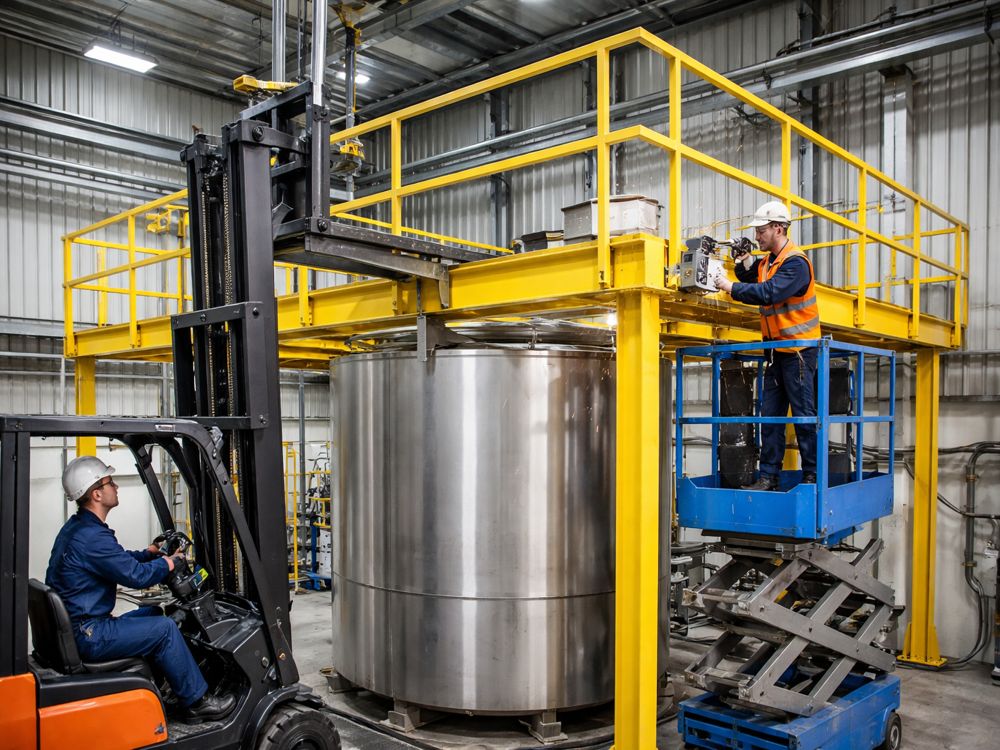
When measurement, design, fabrication, and installation operate as a coordinated system — supported by strong internal procedures — projects move faster, risks decrease, and final quality improves.
And in industrial facilities, that combination is what separates a clean installation from a long list of field fixes.
Industrial facilities are complex, interconnected environments. They were built over decades. They evolve one modification at a time. Very few of them are perfectly square, perfectly level, or perfectly documented.
That reality makes one conclusion unavoidable:
Custom fabrication is usually the right solution for existing facilities.
Pre‑fabricated systems can work well in new construction or highly standardized expansions. But when working inside operating plants, with legacy steel and tight constraints, forcing a catalog solution into a non‑catalog environment often increases field labor, schedule risk, and long‑term maintenance challenges.
Custom fabrication shifts the effort upstream — from reactive field modification to controlled shop execution. But fabrication alone is not enough.
For industrial projects to succeed, field measurement, drafting, fabrication, and installation must operate as one coordinated system. Every additional corporate boundary adds communication friction, delayed decisions, and blurred accountability. When issues inevitably arise, resolution must be immediate and clear.
The most reliable path is a contractor that:
That integration reduces risk. It protects schedule. It improves finished quality. And it eliminates the finger‑pointing that often accompanies fragmented project delivery.
At On Time Fab (OTF), that is the model for every job. We combine field measurement, in‑house drafting, controlled shop fabrication, and professional field installation under one organization.
Our teams understand that success is not defined by whether a part was built correctly in the shop — it is defined by whether it fits, performs, and integrates seamlessly inside your facility.
If you have an upcoming project, we would love to talk with you! Contact us via our website or email, and we will provide you with a detailed job scope and estimate within just a couple of days!